Ridge augmentation in Denver, CO

Ridge augmentation is a common dental procedure used to restore the natural shape of the jawbone and gums after tooth loss. It is most often performed following a tooth extraction when bone loss has occurred, but it may also be recommended in other situations where the jawbone has deteriorated over time.
When a tooth is removed, the surrounding bone and gum tissue begin to change. In some cases, these changes affect both appearance and the ability to place a dental implant in the future. Ridge augmentation helps rebuild the lost bone and soft tissue, creating a more stable and natural foundation for tooth replacement.
Schedule your visit at [practice_name] across the Denver Metro area, call us at one of our convenient locations, Cherry Creek, Central Park, and Parker.
What Is a Ridge Augmentation?
The alveolar ridge is the portion of the jawbone that surrounds and supports the roots of the teeth. When a tooth is removed, an empty socket remains in this ridge. In many cases, the socket heals naturally, gradually filling in with bone and soft tissue.
However, healing is not always predictable. Sometimes the bone surrounding the socket fractures during extraction or is already thin due to prior bone loss. When this happens, the socket may not heal fully on its own. Instead, the height and width of the bone continue to deteriorate over time.
While rebuilding the alveolar ridge is not always medically necessary, it may be required to support dental implant placement or to improve the appearance of the gums and jawline. Dental implants rely on adequate bone for long-term stability, and ridge augmentation helps restore the volume needed to properly support an implant.
Recovery and Next Steps
Your provider will give you detailed instructions for aftercare and healing, as well as guidance on the timeline for future treatment. Healing time varies depending on the extent of grafting and individual factors, but ridge augmentation plays an important role in creating a strong foundation for long-term dental health.
Once the site has healed adequately, the alveolar ridge can be prepared for dental implant placement or other restorative treatment.
Schedule your visit at [practice_name] across the Denver Metro area, call us at one of our convenient locations, Cherry Creek, Central Park, and Parker.
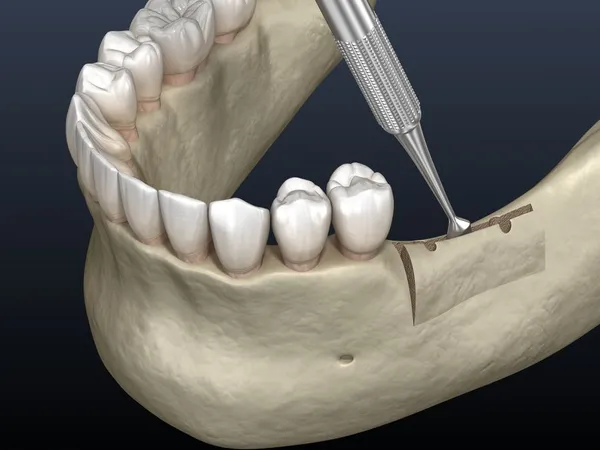
Ridge Augmentation Procedure
How Ridge Augmentation Helps Dental Implant Placement
Dental implants are designed to function like natural tooth roots, but they require sufficient bone to anchor securely. If bone loss has reduced the width or height of the ridge, implant placement may not be possible without first rebuilding the area. Ridge augmentation restores the contour of the jawbone, making it possible to place implants in the correct position.
How Is Ridge Augmentation Performed?
Ridge augmentation is accomplished by placing bone graft material directly into the tooth socket or deficient area of the jawbone. In many cases, the procedure is performed immediately after a tooth is removed. After the graft material is placed, the gum tissue is repositioned over the area and secured with sutures.
Space-Maintaining Materials
In some cases, a space-maintaining material is used over the graft to help preserve the height and width of the ridge while new bone grows into the area. As healing occurs, the graft material integrates with your natural bone.
What to Expect During the Procedure
Ridge augmentation is typically performed in our office using local anesthesia to ensure comfort. For patients who are anxious or prefer additional relaxation, sedation options may be available. Most patients tolerate the procedure well.