Orthognathic surgery in Denver, CO: a patient guide
At Colorado Oral Surgery in Denver, CO, this guide explains orthognathic surgery in clear terms so patients know what jaw correction involves, why it is recommended, and how recovery works.
Orthognathic surgery explained
Orthognathic surgery, often called corrective jaw surgery, repositions the upper jaw (maxilla), lower jaw (mandible), or both to improve chewing, speaking, breathing, and facial balance. It is considered when orthodontic treatment alone cannot correct a skeletal jaw discrepancy.
Planning is coordinated with an orthodontist. Braces or clear aligners move the teeth into positions that will fit properly once the jaws are realigned.
How orthognathic surgery can help
More comfortable bite and improved chewing efficiency

Better speech and lip closure in some cases
Enhanced facial harmony and symmetry
Reduced jaw pain, headaches, and tooth wear
Long-term stability when paired with orthodontics and retainers
What to expect
Before surgery: A review of medical history, medications, and imaging. Pre-op instructions about food, drink, and medications. Planning for time off school or work.
After surgery: Swelling, stiffness, and temporary numbness are common. Most patients take 1–2 weeks away from school or desk work. A soft diet is typical for several weeks while bones heal.
Every surgery has risks. Potential risks include bleeding, infection, unfavorable bite changes, hardware irritation, sinus involvement (upper jaw surgery), and changes in lip or chin sensation. Our oral surgeon reviews risks, benefits, and alternatives so you can make an informed choice.
Is surgery always necessary?
Not always. Some bite issues can be managed with orthodontics alone, dental restorations, or bite splints. When the jaw bones themselves cause the problem, orthognathic surgery is often the most predictable way to correct function and facial balance.
The orthognathic surgery process
1) Assessment and planning
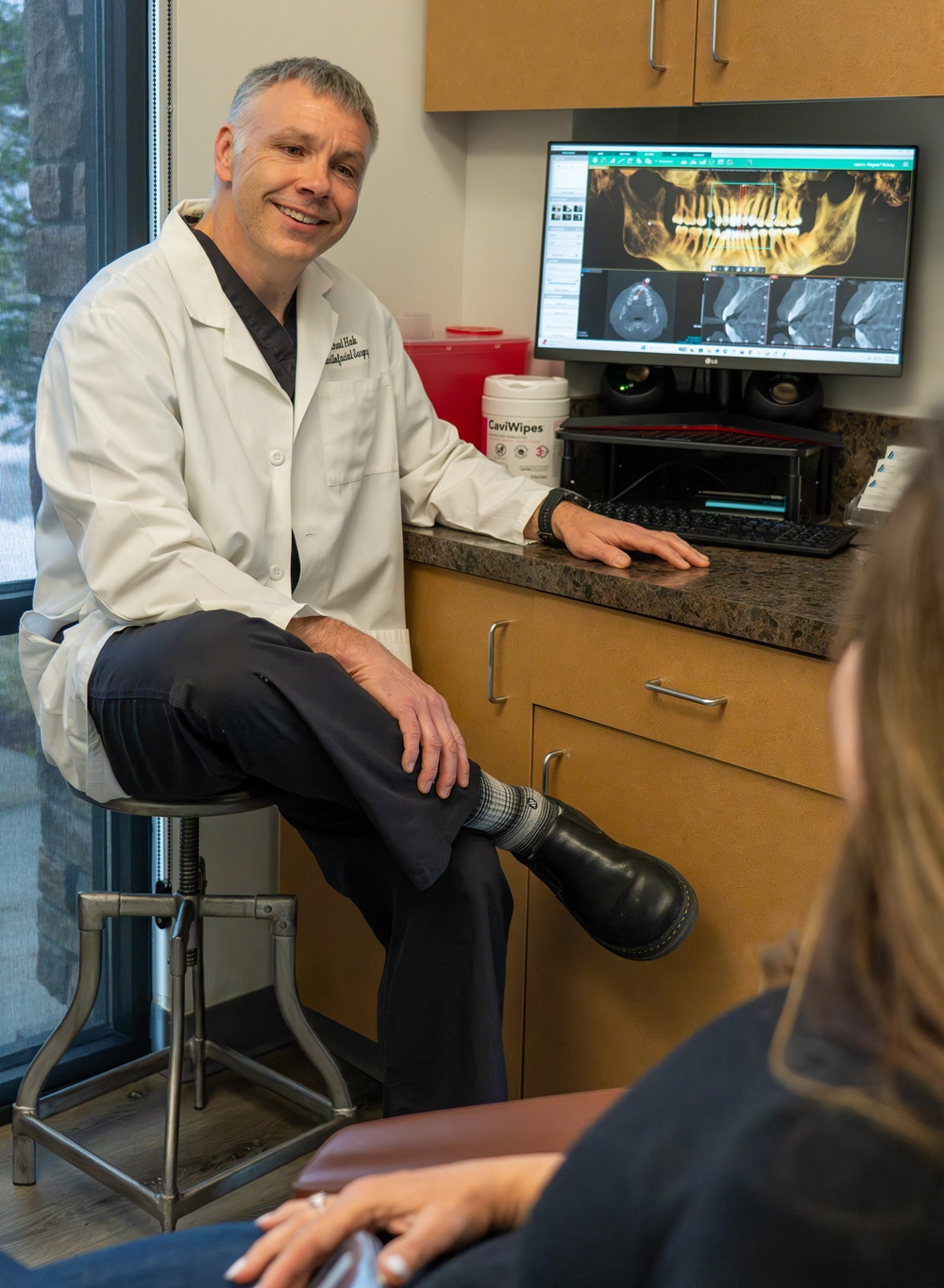
Exam, photos, X-rays, 3D scans, and bite records. A plan is created with your orthodontist to decide which jaw movements will best correct your bite and profile.
2) Pre-surgical orthodontics
Braces or aligners for several months position teeth for their new alignment after surgery.
3) Day of surgery
Under general anesthesia, our oral surgeon will make small incisions inside the mouth, reposition the jaw bones, and secure them with tiny titanium plates and screws.
4) Recovery and finishing
Swelling and bruising peak at 48–72 hours, then improve. After initial healing, orthodontic treatment fine-tunes the bite. Retainers help maintain results.